Cubic volume is the space your goods take up, measured in cubic metres (m³). It decides which truck you need and, for many services, what you pay.
A small miscalculation can be costly. Two cubic metres short means the goods do not fit and a second truck has to be booked at the last minute. Ten cubic metres over means you pay for empty space.
The basic formula
Measure the length, width and height of one package in centimetres, including its packaging or pallet. Multiply the three, then divide by 1,000,000 to convert cm³ to m³.
m³ =L × W × H (cm)1,000,000× packages
Example: 40 cartons
One carton measures 60 × 40 × 50 cm. You are shipping 40 cartons.
- Volume of one carton: 60 × 40 × 50 = 120,000 cm³.
- Convert to m³: 120,000 ÷ 1,000,000 = 0.12 m³.
- Total: 0.12 × 40 = 4.8 m³.
Example: palletised goods
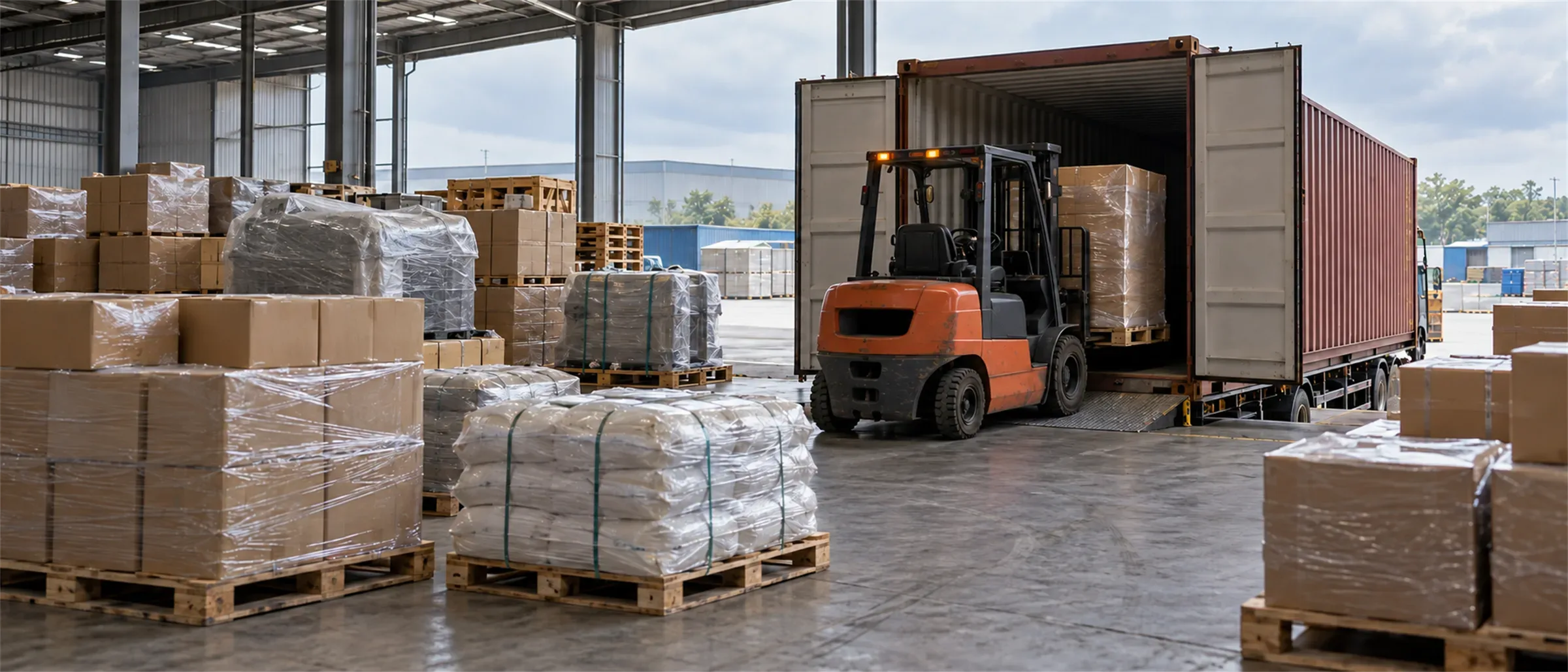
For palletised goods, measure the pallet together with the stack on top. A standard 120 × 100 cm pallet stacked 110 cm high takes up 1.32 m³. Ten pallets come to 13.2 m³.
Volumetric weight: when volume matters more
Light but bulky goods, such as foam or empty plastic packaging, fill the truck before its weight limit is reached. That is why carriers use volumetric weight: the cubic volume multiplied by a conversion factor. You pay on whichever is higher, actual weight or volumetric weight.
Typical factors. Exact figures depend on the carrier. Sample.
| Mode | Conversion factor | 1 m³ equals |
|---|
| Land (truck) | 1 m³ = 250–333 kg | 250–333 kg |
| Sea LCL | 1 m³ = 1,000 kg | 1 tonne (W/M) |
| Air | L × W × H ÷ 6,000 | ±167 kg |
Work out the right unit
Enter the size and weight. The unit finder calculates the cubic volume and shows the smallest truck that fits.
Open the unit finder
From volume to truck choice
A truck body is never filled to 100%. There are gaps between packages, room for lashing gear, and goods that cannot be stacked. Use 85% of the body volume as a safe limit.
- Up to about 7.5 m³: CDE box truck (9 m³ capacity).
- Up to about 14 m³: CDD box truck (16.8 m³).
- Up to about 25 m³: Fuso box truck (30.2 m³).
- Over 25 m³: a tronton truck or a 40 ft container.
Unit capacities: sample
“Most last-minute second trucks come down to one thing: the pallet height was measured without the stack on top.”
The three most common mistakes
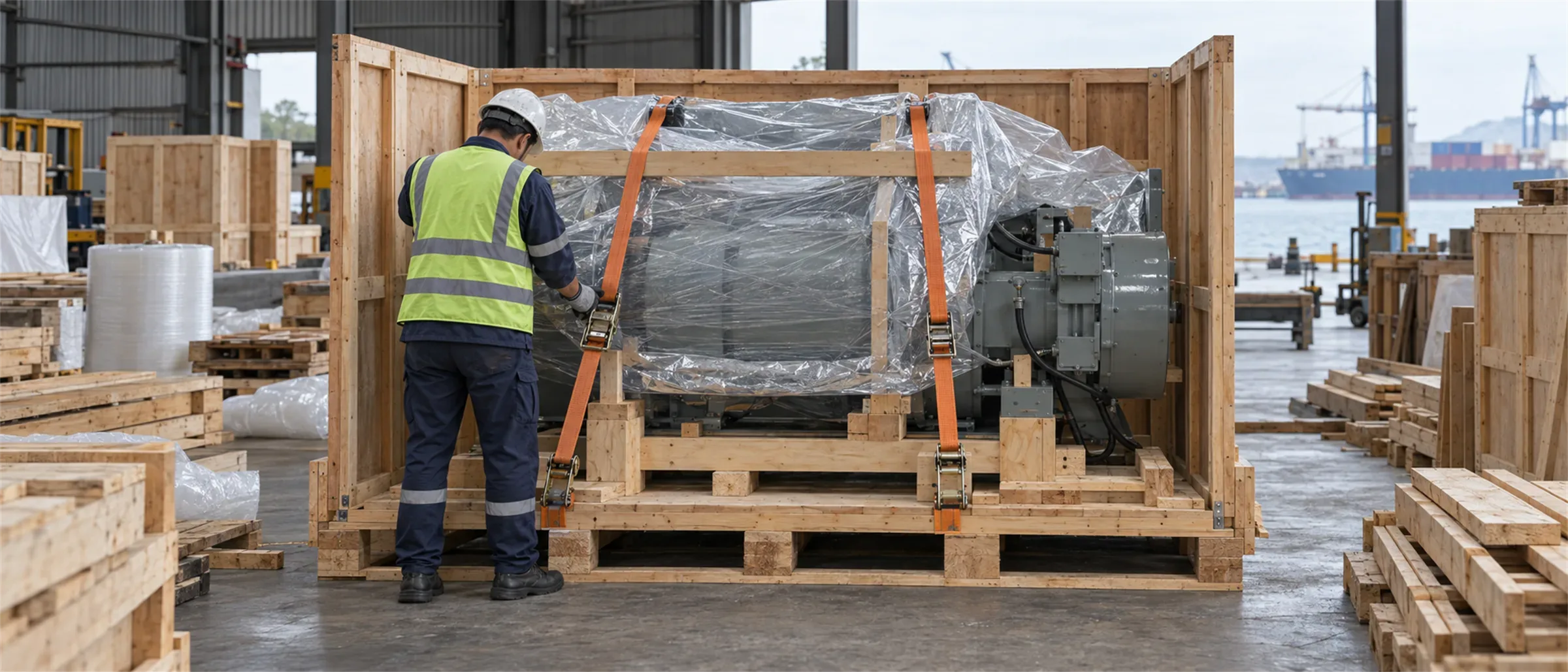
- Measuring goods without packaging. A timber crate can add 10–15 cm on every side.
- Mixing units. Length in metres and width in centimetres gives a figure that is out by a factor of a hundred.
- Ignoring goods that cannot be stacked. Fragile goods use the full body height even if they are only half as tall.
Updated 3 October 2026 · Reviewed by the Dewanta Global Nusantara operations team