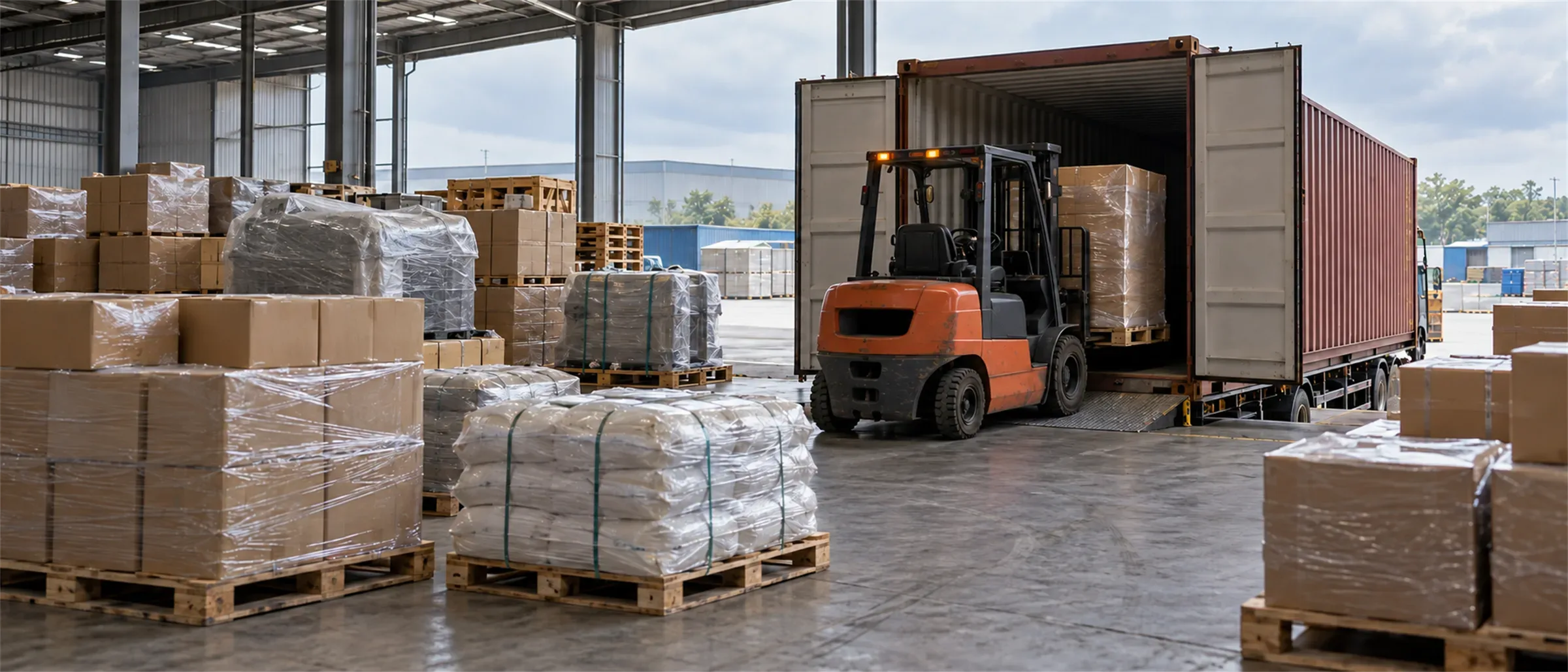
Choosing between FCL (a full container for you alone) and LCL (your cargo shares a container with other shippers) cannot be settled on the ocean rate alone. Port charges and time risk often reverse the result.
This guide helps you work out the break-even point with your own numbers.
The volume break-even point
LCL is priced per m³ or per tonne, whichever is higher (W/M). FCL is priced per container, however full it is. Divide the FCL rate by the LCL rate per m³ to find the break-even point.
Example: a 20 ft FCL from Surabaya to Makassar costs IDR 9,000,000 and LCL costs IDR 600,000 per m³. The break-even point is 15 m³. Above 15 m³, FCL is cheaper even if the container is not full.
Unsure about your documents or schedule?
Send your question on WhatsApp. Our forwarding team replies within 30 minutes during working hours.
Ask our team
Extra port charges
LCL carries charges that FCL does not: CFS (consolidation warehouse) fees, handling per m³ and documentation fees per shipper. For small loads these can reach 30% of the total.
FCL has its own cost risk: demurrage and detention if the container is returned late. Make sure unloading at the destination warehouse is ready before the vessel arrives.
The time risk of consolidation
LCL cargo waits for the container to fill before it ships, then waits to be unloaded at the destination CFS. Add 3–5 days to the transit estimate. If your goods are needed for production or a project with a deadline, that delay often costs more than the rate difference.
Updated 3 October 2026 · Reviewed by the Dewanta Global Nusantara operations team